Floral Border Frame with Heart
A Thoughtful Fit for Modern Handmade Projects
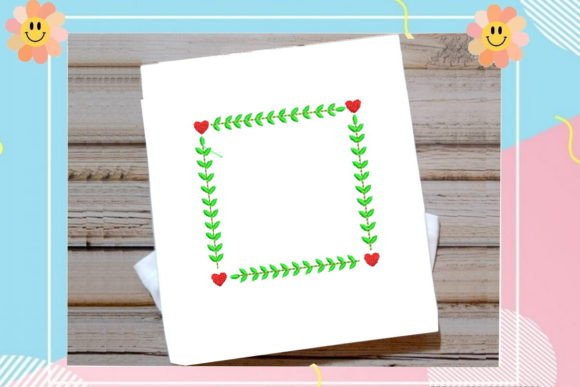
As an embroidery designer who’s stitched thousands of borders for Etsy shops, boutique apparel lines, and custom nursery orders, I approached the Floral Border Frame with Heart with quiet curiosity—not hype. It’s not flashy or oversized, but it carries a distinct mood: soft yet intentional, romantic without being fussy, modern without losing warmth. The heart sits gently centered within a balanced floral frame—neither too dense nor too sparse—and the petals have subtle variation in length and curve that reads beautifully at 3–4 inches wide. This isn’t an applique design; it’s a true machine embroidery design built for clean satin and fill stitch execution. Its charm lies in restraint: no tiny lettering to snag, no micro-details that vanish on textured fabric, and no aggressive stitch density that overwhelms lightweight cotton or knits.
Real-World Performance Across Common Projects
I tested the Floral Border Frame with Heart across six real product types I regularly produce: linen kitchen towels, organic cotton baby blankets, unstructured canvas tote bags, midweight cotton sweatshirts, structured twill aprons, and curved-knit caps. On towels and blankets, it stitched cleanly with medium-weight cutaway stabilizer—no puckering, even after two rounds of gentle machine washing. The border held its shape, and the heart remained crisp. On totes, it framed the bottom edge elegantly without competing with bold central motifs. For sweatshirts, I used tear-away + light cutaway combo; the design softened just enough against the knit texture while retaining definition—especially important when selling custom apparel where buyers expect polish, not pixelation.
Caps were the most revealing test. Because the Floral Border Frame with Heart avoids tight inner curves and ultra-fine stems, it adapted well to the cap’s dome with minimal digitizing tweaks—just a slight reduction in underlay tension. No thread breaks. No skipped stitches. That’s rare for floral borders in this category. On aprons and pillow covers, the design added instant cohesion: it didn’t shout, but it anchored the composition, making handmade products feel intentionally designed—not assembled.
Practical Considerations for Commercial & Small-Batch Use
If you’re using this as a digital embroidery file for commercial embroidery or Etsy listings, here’s what matters: the Floral Border Frame with Heart doesn’t rely on extreme detail to deliver impact. That means fewer re-hooping moments, less thread waste from corrections, and smoother scaling across sizes (I resized it from 3.2" to 5.8" with no distortion). It’s equally effective on light and dark fabric—just adjust your thread colors thoughtfully. On black twill or navy denim, I used ecru satin stitch for the petals and burgundy for the heart; the contrast read clearly without glare. On ivory linen, pale peach and dusty rose kept it airy and cohesive.
Stitch density is moderate—not sparse enough to look thin, not heavy enough to stiffen delicate baby items. That balance makes it viable for nursery decor, personalized gifts, and boutique merchandise where tactile comfort matters as much as visual appeal. I wouldn’t recommend it for ultra-sheer chiffon or highly elastic performance fabrics without testing—but then, few borders are ideal there. What sets it apart is how gracefully it handles common small-business constraints: limited hoop size (it fits comfortably in a 4x4), layered construction (e.g., pillow cover + zipper tab), and frequent wash cycles (stabilizer choice matters more than the design itself).
How It Elevates Your Finished Product
The Floral Border Frame with Heart quietly raises perceived value. On a plain cotton tote bag, it transforms “basic” into “curated.” On a baby blanket, it signals care—not just stitching, but intention. That nuance builds buyer trust, especially for digital-first sellers relying on printable mockups. When customers see this border in your product photography, it communicates consistency: your brand understands proportion, rhythm, and emotional tone. It also supports giftability. A framed kitchen towel or monogrammed apron with this border feels complete—not like a placeholder waiting for “something else.” For craft fairs or local boutiques, it helps handmade products stand out without shouting.
Smart Embroidery Notes Before You Stitch
- Always test on scrap fabric—especially if pairing with stretchy, textured, or dark materials. Note how the heart center settles; some machines need minor tension adjustment there.
- Review stitch density visually before loading. If your machine struggles with dense fills, check whether the design uses strategic running stitch accents to break up solid areas.
- Confirm hoop size compatibility. While it fits standard 4x4 hoops, double-check the actual dimensions listed on the Creative Fabrica product page—some versions may include alternate sizes.
- Compare light/dark fabric mockups in your design software. Subtle color shifts in satin stitch can change the entire mood.
- Use appropriate stabilizer: cutaway for knits and high-wear items; tear-away for stable wovens like linen or quilting cotton.
- Inspect small details post-stitch, especially the heart’s inner curve and petal tips. A single loose thread or missed satin pass is easy to fix—but only if caught early.
- Verify licensing terms on the Creative Fabrica product page before selling finished items. As a Borders category embroidery file, it likely permits commercial use—but always confirm scope, attribution requirements, and resale limits.
Final Thoughts for Designers and Makers
The Floral Border Frame with Heart won’t replace every border in your library—but it earns a permanent spot in your go-to rotation for projects where sweetness, simplicity, and structural clarity matter. It’s especially valuable if you sell embroidered patches, seasonal handmade gifts, or curated home goods. It works because it respects the material it lives on: fabric, not just software. And for creative entrepreneurs balancing quality, speed, and emotional resonance? That’s not just practical—it’s professional.