Cup of Strawberry
First Impression: Sweet, Simple, and Surprisingly Versatile
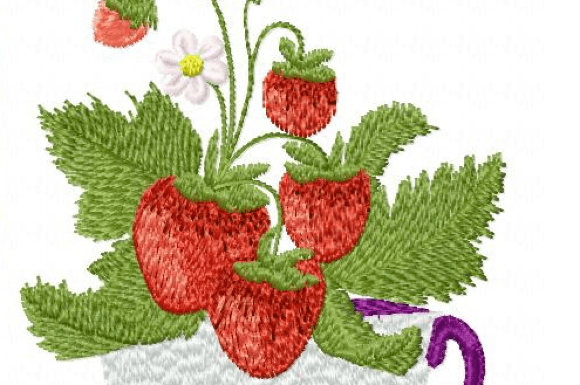
When I opened Cup of Strawberry for the first time—prepping it for a client’s custom kitchen towel set—I paused. Not because it’s flashy or technically complex, but because it *feels* like a moment: ripe strawberries spilling from a ceramic cup, soft curves, gentle gradients in the fruit, a subtle sheen on the glaze. It’s not overly detailed, but it’s intentionally expressive—friendly without being cutesy, fresh without feeling generic. As a machine embroidery design, it leans into warmth and approachability, making it ideal for handmade product lines that value authenticity over polish.
Real-Life Test: Embroidering It on a Linen Tea Towel
I stitched Cup of Strawberry onto a medium-weight, natural linen tea towel—no applique, just fill and satin stitch elements. The result? Clean lines, balanced stitch density, and excellent legibility at 3.5 inches wide. No thread nesting, no puckering—even with minimal tear-away stabilizer. That tells me this embroidery file was digitized thoughtfully: generous underlay, smooth transitions between satin and fill areas, and smart spacing around the stem and cup rim. It didn’t fight the fabric; it settled into it. Customers browsing my small shop noticed it immediately—not as “cute food art,” but as something they’d *want to use daily*. That’s the quiet power of Cup of Strawberry: it elevates utility with personality.
Where It Shines (and Where It Needs Care)
Cup of Strawberry works beautifully on:
- Tote bags and aprons — its rounded shape fills a standard 4x4 hoop naturally and reads well at arm’s length;
- Baby items and nursery decor — soft colors and gentle outlines avoid visual clutter on onesies or pillow covers;
- Holiday and wedding gifts — pair it with mint or blush thread on ivory cotton for a spring brunch favor or bridal shower towel;
- Etsy listings and craft fair merchandise — it photographs cleanly, scales well in printable mockups, and feels cohesive across a “kitchen garden” collection.
Use caution on:
- Stretchy fabrics like knits or thin jersey — the cup’s curved base needs stable tension; always test with cutaway stabilizer;
- Dark or heavily textured fabrics — the strawberry highlights rely on light thread contrast; verify visibility on charcoal towels or burlap;
- Caps and curved surfaces — the design’s width fits most front-panel cap placements, but avoid stitching near the bill curve where distortion can blur the cup’s rim;
- Small hoop sizes under 3.5 inches — tiny stems and seed details may compress or lose definition; check how the design renders in your embroidery software before resizing.
Design Integrity Meets Commercial Practicality
As an embroidery designer who also sells digital embroidery files, I judge Cup of Strawberry not just by how it stitches—but by how it performs in the buyer’s hands. Does it build trust? Yes. Its consistent spacing and clean satin edges signal professionalism—not just in the finished product, but in the file itself. When an Etsy seller uses Cup of Strawberry on a personalized sweatshirt, the result looks intentional, not rushed. When a boutique brands matching tea towels and oven mitts with it, the motif ties the collection together without demanding perfect color matching across dozens of thread brands.
It also supports brand consistency. Unlike hyper-detailed designs that overwhelm small-scale items, Cup of Strawberry scales gracefully—from a 2-inch embroidered patch on a denim jacket to a 5-inch version on a linen blanket. And because it avoids fine lettering or micro-details, it holds up through repeated washing—critical for kitchen and baby embroidery.
Practical Designer Notes Before You Stitch
Before adding Cup of Strawberry to your next project, take these five minutes:
- Test on scrap fabric — especially if using textured linen, terry cloth, or lightweight cotton;
- Check thread color contrast — try it in both bright pink and muted coral against your base fabric; some strawberry reds fade on dark backgrounds;
- Review stitch density in your software — look for dense fill areas near the cup’s base; adjust if needed for lightweight fabrics;
- Confirm hoop size compatibility — while it fits comfortably in a 4x4, verify your machine’s max dimensions if stitching on older models;
- Inspect small details in black-and-white mockups — this reveals whether the stem and leaf read clearly when converted to grayscale for packaging or social media.
Also: confirm licensing terms before selling finished products or bundling Cup of Strawberry into digital embroidery collections. If you’re a craft business owner or Etsy seller, clarity here protects your reputation—and your bottom line.
Final Thought: A Design That Serves the Maker and the Market
Cup of Strawberry isn’t a showstopper meant for gallery walls—it’s a quietly confident workhorse. It adds charm without clutter, warmth without cliché, and versatility without compromise. Whether you’re embroidering a one-of-a-kind baby bib, stocking a local boutique with kitchen-themed goods, or building a cohesive line of digital embroidery assets, this design earns its place in your library. It doesn’t ask for special treatment—just thoughtful execution. And in the world of handmade product creation, that kind of reliability is rarer—and more valuable—than any strawberry glaze.