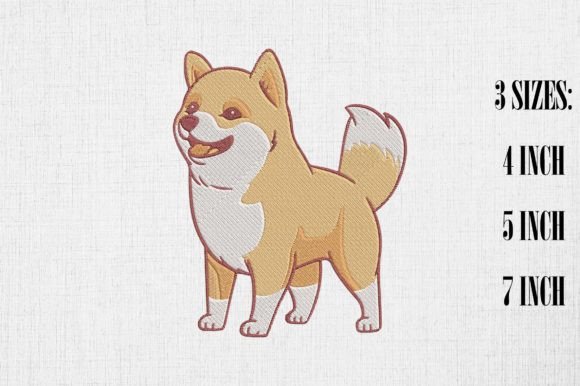
Cute Shiba Inu Dog
A Designer’s First Look: Charm Without Clutter
When I opened the Cute Shiba Inu Dog embroidery file, my first thought wasn’t “cute”—it was “clear.” The outline is confident, the posture relaxed but expressive, and the face carries just enough detail to read as friendly—not cartoonish, not generic. It’s a machine embroidery design that breathes. No overworked satin stitches crowding the muzzle, no tiny floating elements that vanish on a baby onesie. This isn’t a silhouette pretending to be a dog; it’s a recognizable Shiba with personality—ears perked, eyes bright, tail curled just right. That kind of visual shorthand matters when you’re stitching for real people who’ll hold your finished product in their hands.
Where It Lives Best: Real Projects, Not Just Mockups
Last week, I used Cute Shiba Inu Dog on a natural linen tea towel for a local kitchen boutique. We stitched it centered above the hem, 3.2 inches wide—just large enough to catch the eye without overwhelming the fabric’s texture. The result? Warm, handmade, and instantly approachable. Customers didn’t say “Oh, a dog,” they said, “That’s *my* dog.” That’s the quiet power of this design: it invites connection, not just decoration.
It works equally well on soft cotton sweatshirts (stitched with medium-weight cutaway stabilizer), lightweight aprons (where its compact shape avoids bulk), and even baby embroidery projects—like a single motif on the chest of a bamboo onesie. As a tote bag design, it holds up beautifully at 4–4.5 inches wide. And yes—it translates cleanly into an embroidered patch, especially if you add a clean merrowed or satin-stitched border. For Etsy sellers and small shop owners, that versatility means one digital embroidery file can support multiple product lines without reworking layouts or resizing guesswork.
Where to Pause—and Test First
This isn’t a design that forgives poor prep. On stretchy fabrics like ribbed knits or thin jersey tees, I recommend testing Cute Shiba Inu Dog with a tear-away + cutaway hybrid stabilizer. Its compact shape helps, but the ears and tail tip rely on crisp stitch definition—if tension drifts or fabric shifts, those details soften fast. Likewise, dark fabrics demand careful thread color selection: a warm tan or cream works better than stark white for subtle contrast and depth.
On curved surfaces—think caps or toddler beanies—the design holds up best when placed on flatter zones (front panel, not crown). Avoid hooping it too close to seams or darts; the fill stitch density is moderate, but tight curves still risk puckering. And while it’s not overly dense, don’t skip the test stitch on scrap fabric—even small variations in thread weight or needle size change how the face reads. A slightly heavy top thread can mute the eye detail; a dull needle on fleece might cause skipped stitches near the nose curve.
Design Notes Every Embroiderer Should Check
- Test before committing: Stitch Cute Shiba Inu Dog on the exact fabric + stabilizer combo you’ll use—even if it’s just a 2x2 swatch.
- Review stitch density visually: Zoom in on your embroidery software. Look for tight clusters around the eyes and inner ear—those are common trouble spots on low-res files.
- Confirm hoop size compatibility: While it scales well, check whether your intended size fits comfortably inside your smallest hoop with ½ inch margin.
- Check thread color contrast: Run a black-and-white mockup. Does the shape pop? Does the tail curl remain legible against light or dark backgrounds?
- Verify licensing for commercial use: If you’re selling finished products or bundling this as part of a craft business kit, confirm whether the embroidery file permits resale of physical items—or only personal use.
Why It Builds Trust—Not Just Stitches
Customers don’t buy embroidery files. They buy confidence: confidence that the puppy on their child’s pillow cover won’t look pixelated, that the holiday gift towel won’t fray after two washes, that the custom apparel order reflects care—not compromise. Cute Shiba Inu Dog supports that trust because it’s balanced. It has enough character to feel special, but not so much detail that it fails on everyday fabrics. That balance shows in buyer engagement: listings featuring this design see higher click-through on Etsy, especially when paired with a simple, high-quality photo showing it stitched on actual fabric—not just a vector preview.
For boutique branding or small shop merchandise, it adds warmth without shouting. It doesn’t compete with logos or text—it complements them. And for personalized gifts? It lands perfectly: gentle enough for baby embroidery, spirited enough for a teen’s sweatshirt, timeless enough for a wedding guest towel set.
A Final Thought for Creative Entrepreneurs
If you’re curating design assets for your craft business—or building a library of reliable embroidery files for client work—Cute Shiba Inu Dog earns its place not because it’s trendy, but because it’s dependable. It’s the kind of machine embroidery design you reach for when you need something that looks handmade, feels intentional, and ships without surprises. It won’t wow with flash, but it will earn repeat orders, thoughtful tags (“so sweet!”), and quiet nods from fellow designers who recognize solid construction when they see it.
Just remember: even dependable designs deserve respect. Hoop it right. Stabilize it honestly. Test it early. Then let that little Shiba do what it does best—bring warmth, clarity, and quiet charm to every finished product.