Snowflake-Trilogy-E: A Delicate, Versatile Holiday Embroidery Design
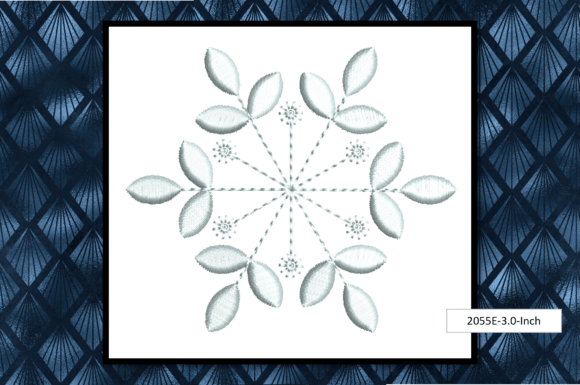
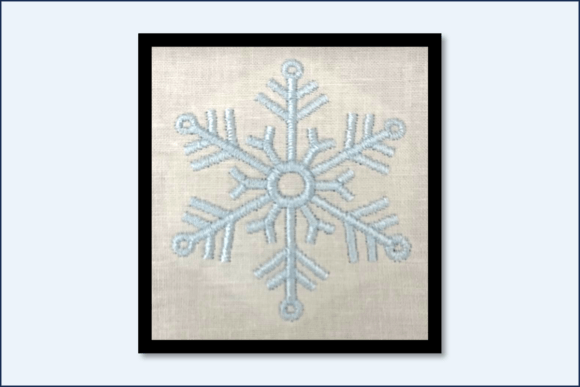
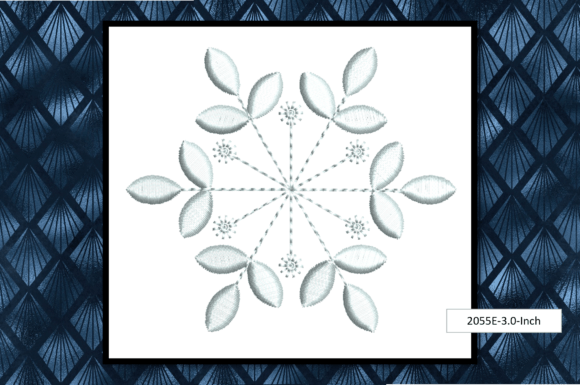
As a designer who’s stitched hundreds of holiday motifs for clients—from boutique aprons to Etsy baby onesies—I opened Snowflake-Trilogy-E expecting charm. What I found was something more: a quiet, confident elegance that doesn’t shout “Christmas,” but invites closer looking. It’s not a bold, glittering snowflake—it’s a refined trio of interlocking forms, with fine arms tapering into subtle points and gentle negative space between them. The mood is hushed, thoughtful, almost heirloom-like—ideal for customers who want holiday spirit without kitsch.
Last week, I used Snowflake-Trilogy-E on a custom organic cotton tote bag for a local nursery owner. She wanted something soft enough for baby gifts but distinct enough to stand out at craft fairs. We stitched it in pale silver thread on ivory linen-cotton blend—no backing visible, no puckering, just clean definition. When the finished tote arrived, a customer paused mid-aisle, ran her finger over the embroidery, and asked, “Is that hand-stitched?” That’s the kind of reaction this design earns—not because it’s flashy, but because its balance and proportion read as intentional, skilled, and quietly luxurious.
Where Snowflake-Trilogy-E Shines (and Where It Asks for Care)
Snowflake-Trilogy-E works beautifully on stable, medium-weight fabrics where stitch clarity matters most: kitchen towels, pillow covers, lightweight blankets, and structured aprons. Its open layout avoids dense fill areas, so it breathes well on tea towels and napkins—even after repeated washing. On sweatshirts and fleece-lined totes, it holds shape without stiffness, especially when paired with a light cutaway stabilizer underneath.
It’s also a strong candidate for baby embroidery. The clean lines and absence of tiny detached elements (like floating stars or micro-dots) make it safe and durable for onesies and burp cloths—no snagging risk, no fraying corners after laundering. For personalized gifts—a monogrammed blanket, a holiday-themed cap, or an embroidered patch sewn onto a denim jacket—it adds seasonal warmth without overwhelming the item’s function or silhouette.
That said, Snowflake-Trilogy-E asks for attention on textured or stretchy surfaces. On terry cloth towels, the delicate arms can blur if stitch density isn’t balanced—test first with a slightly reduced density setting. On knits like jersey or ribbed cotton, use tear-away + light cutaway stabilizer combo and hoop gently; too much tension pulls those fine arms out of alignment. And avoid placing it directly over seams or curved zones like cap crowns unless you’ve tested hooping angles and adjusted placement accordingly.
Design Integrity Meets Real-World Use
What makes Snowflake-Trilogy-E valuable beyond aesthetics is how it supports brand consistency. If you’re an Etsy seller building a cohesive holiday line—say, matching tea towels, oven mitts, and baby blankets—this design scales cleanly across sizes. It reads equally well at 3.2” on a pocket and 5.5” on a pillow cover, thanks to its proportional arm spacing and consistent line weight. No detail collapses or turns muddy when resized moderately.
For digital product sellers, it’s a smart addition to a Christmas embroidery bundle. Unlike overly complex snowflakes with dozens of color changes or nested satin stitches, Snowflake-Trilogy-E is likely low-to-moderate in stitch count (exact count depends on file version—always verify), making it accessible for home embroiderers with mid-range machines. It’s also highly effective in black-and-white mockups—essential for clean Etsy listings or printable lookbooks—because contrast and form remain legible even without thread color context.
Practical Notes Every Designer Should Check Before Stitching
- Test on scrap fabric first—especially if using dark thread on light fabric or vice versa. Subtle details can vanish without enough contrast.
- Review stitch density before scaling up. Too dense = stiff texture; too sparse = fragile arms. Adjust in your embroidery software if needed.
- Confirm hoop size compatibility. While it’s designed for versatility, very small hoops (e.g., 4” round) may require repositioning or trimming outer elements—check the design’s bounding box.
- Inspect small details at 200% zoom in your editing software. Look for stray running stitches, overlapping nodes, or under-digitized inner corners.
- Try it on both light and dark fabric backgrounds in your mockup workflow. Some snowflakes rely on white thread pop—Snowflake-Trilogy-E performs well in tonal combos (ivory on charcoal, navy on cream), but verify.
- Use appropriate stabilizer: light cutaway for knits, tear-away for stable wovens, fusible for patches. Skip heavy stabilizers—they mute the delicacy.
- Confirm licensing terms before selling finished items commercially or bundling the embroidery file digitally. Not all Christmas designs permit resale of stitched goods or redistribution of the file itself.
Why This Design Builds Trust—Not Just Decoration
Customers don’t just buy snowflakes. They buy confidence—in craftsmanship, in longevity, in intention. Snowflake-Trilogy-E supports that trust because it looks handmade, not machine-made: no robotic repetition, no awkward jumps, no filler stitches masquerading as detail. When stitched cleanly, it reads as considered—not generic. That perception lifts perceived value, whether you’re pricing a $28 embroidered tea towel or a $95 custom baby blanket.
For small shop owners and craft fair vendors, that distinction matters. A buyer comparing two identical totes—one with a bold, mass-produced snowflake, one with Snowflake-Trilogy-E—often chooses the latter because it feels *chosen*, not dropped in. It signals care in curation, not just convenience.
If you're curating design assets for a holiday collection, building a printable mockup library, or prepping for a busy Etsy season, Snowflake-Trilogy-E is worth keeping within easy reach. Not as a filler motif—but as a quiet anchor: refined, adaptable, and ready to elevate whatever it touches.