My Dad My Hero
A Designer’s Real-World Review Before the First Stitch
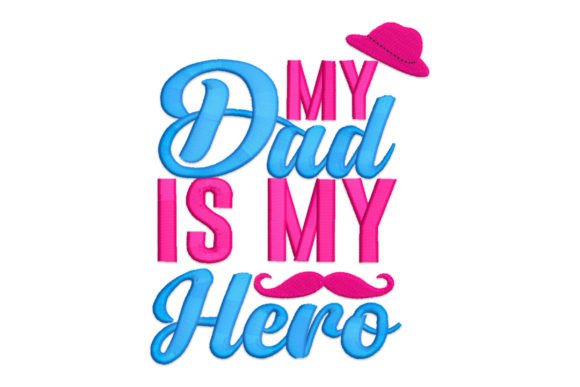
As an embroidery designer who’s developed over 300+ digital embroidery files for gift shops, Etsy sellers, and craft fair vendors, I test every new design like it’s going straight into a customer’s hands — not just my hoop. That’s how I approached My Dad My Hero. This isn’t just another Father-themed machine embroidery design. It’s a quiet emotional anchor — simple in phrasing but rich in intention. The phrase “My Dad is my Hero” lands with sincerity, not sentimentality. No clipart flair, no cartoon fonts — just clean, confident lettering with subtle curve emphasis on the “o”s and soft spacing that invites warmth. It feels handmade, classic, and quietly elegant — perfect for customers seeking timeless over trendy.
Where This Design Truly Shines
My Dad My Hero excels where meaning meets medium. For baby embroidery? It transforms a receiving blanket or onesie into a legacy piece — think newborn photos with dad holding a tiny embroidered corner. As a wedding gift, stitch it onto a linen pillow cover for the groom’s suite or a custom apron for his first Father’s Day as a husband. Nursery decor gains instant heart when paired with wooden name blocks or framed wall art. And for small shop owners: this design scales beautifully across product categories without losing clarity — whether stitched on a thick cotton kitchen towel, a lightweight linen tote, or a velvet pillow cover.
Etsy sellers will appreciate how naturally My Dad My Hero fits into curated collections: “First-Time Dad Gifts,” “Sentimental Nursery Essentials,” or “Handmade Wedding Keepsakes.” Its versatility means one digital embroidery file supports multiple listings — a pillow cover, a blanket embroidery option, and a printable mockup for digital previews — all reinforcing the same heartfelt message. Craft fair shoppers respond to authenticity, and this design delivers: it reads as intentional, not generic. Customers don’t buy “a dad design” — they buy a promise, a memory, a quiet tribute. That emotional connection elevates perceived value and builds trust in your handmade product.
Smart Placement & Fabric Considerations
While My Dad My Hero is forgiving in layout, thoughtful execution makes all the difference. Avoid placing it on highly textured fabric (like heavy terry cloth towels) without extra stabilizer — those delicate letter curves can blur if the base shifts mid-stitch. On stretchy baby clothes, use cutaway stabilizer and avoid tight necklines or curved seams; the phrase reads best on flat, stable surfaces like chest panels or blanket corners.
Dark fabric demands attention: confirm thread color contrast before stitching — light ecru or soft gray may vanish on navy or charcoal unless you adjust. Likewise, small lettering requires precision: if your hoop size is under 4x4 inches, double-check readability at final scale. A 3.5-inch-wide version may look charming on a baby bib but lose legibility on a phone case or keychain — always preview at actual size using a printable mockup.
For frequently washed items — embroidered towels, aprons, or kids’ blankets — verify stitch density. Overly dense fills trap moisture and wear faster. A balanced density ensures durability *and* softness against skin. And remember: curved surfaces (like mugs or rounded totes) require repositioning or specialized hoops — stick to flat panels unless you’ve tested alignment thoroughly.
What This Design Says About Your Brand
When customers see My Dad My Hero on your Etsy listing or boutique shelf, they’re subconsciously assessing your standards: Is this thoughtful? Is it well-executed? Does it feel personal, not mass-produced? That perception hinges on your process — not just the file itself. A crisp, centered stitch on a premium pillow cover tells a story of care. A slightly crooked line on a rushed towel says the opposite. That’s why I treat every My Dad My Hero project as a brand touchpoint.
Product photography benefits immensely from its clean structure — no busy elements compete with the message. Shoot it on natural light, folded neatly beside a coffee mug or tucked into a gift box. Buyers engage longer when the design feels intentional, not incidental. And because it avoids seasonal clichés (no ties, tools, or baseballs), it stays relevant year-round — ideal for small shop owners managing evergreen inventory.
Practical Embroidery Notes You Can’t Skip
- Always test on scrap fabric first — especially with new stabilizer combos or unfamiliar thread brands.
- Check thread color contrast on both light and dark fabric swatches before batching orders.
- Confirm hoop size compatibility; some versions may require 5x7 or larger for optimal spacing — review the embroidery file specs carefully.
- Review stitch density: If the file feels overly dense for delicate fabrics, consider reducing fill stitches in editing software (if licensed for modification).
- Use appropriate stabilizer: Cutaway for knits and stretchy baby clothes; tear-away for stable wovens like linen or quilting cotton.
- Compare light/dark fabric mockups — what reads clearly on white may disappear on black without thread adjustment.
- Inspect small details post-stitch: Ensure letter curves remain smooth and no thread nests hide in corners.
- Verify commercial licensing before selling finished products — this is non-negotiable for Etsy sellers and small business owners.
Bottom line: My Dad My Hero isn’t flashy — and that’s its strength. It meets customers where they are: in moments of quiet gratitude, proud milestones, and everyday love. Whether you’re stitching for a newborn’s first Father’s Day, a wedding toast keepsake, or a handmade pillow cover for a retiring grandfather, this design carries weight without pretense. Just remember — its power multiplies with your attention to detail, your respect for fabric behavior, and your commitment to making each personalized gift feel truly seen.